

Why Junior Developers Are Struggling to Get Jobs in 2026 (Real Industry Truth)
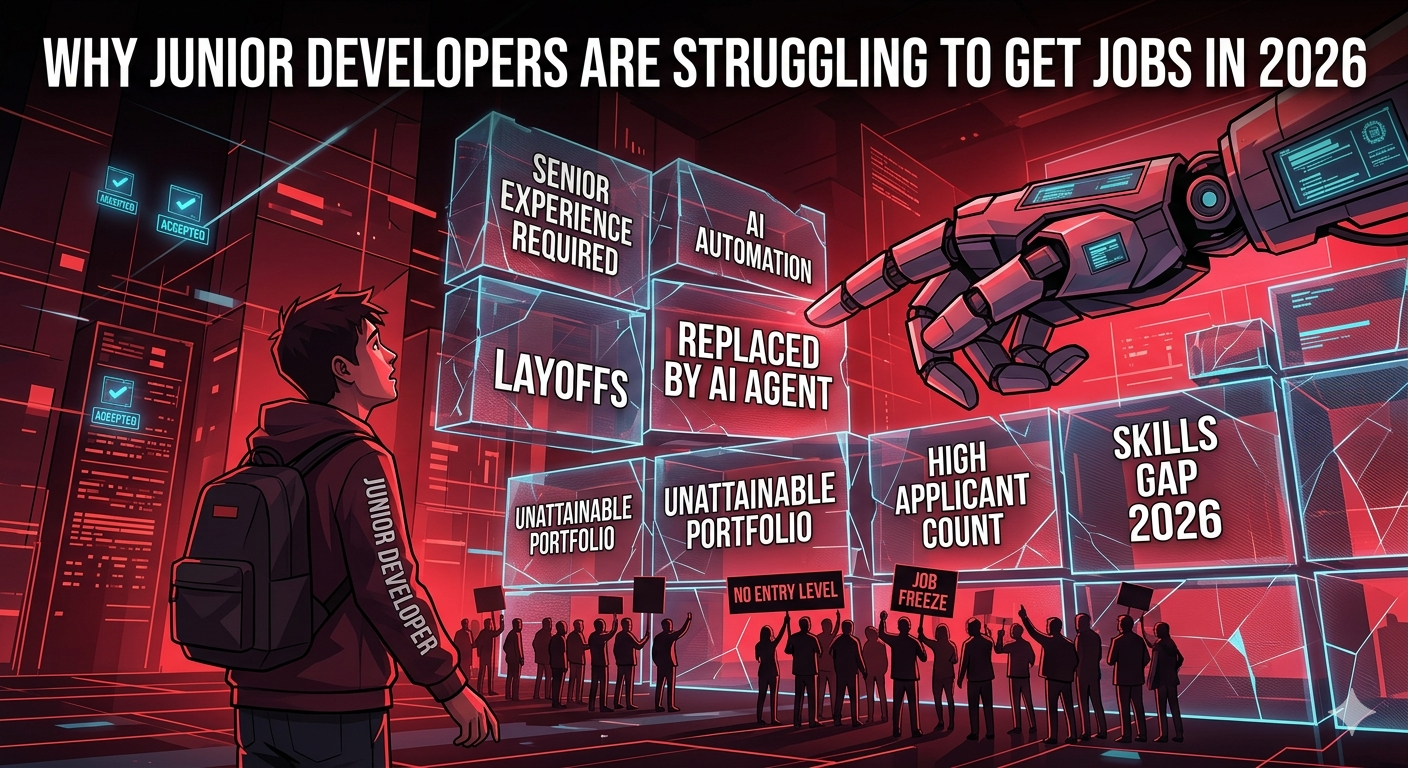
Many junior developers are finding it harder than ever to land their first job in 2026. This article explains the real reasons behind this struggle, rising expectations, and what beginners can do to stay competitive.

On this page
Introduction
If you talk to junior developers today, you will hear the same frustration again and again:
"I learned programming… I built projects… but I’m still not getting interviews."
In 2026, many beginners feel confused and discouraged. They see job posts asking for experience, multiple technologies, and advanced skills — even for entry-level roles.
Some people blame AI. Others blame competition.
But the real truth is more complicated — and more human than most articles explain.
Junior developer jobs are not gone. But they have definitely become harder to get.
And understanding why this is happening can help beginners avoid wasting time and make smarter career decisions.
The Reality Many Beginners Are Facing
A few years ago, learning HTML, CSS, JavaScript, or basic programming was often enough to land a junior developer role.
Today, many beginners complete courses, build small projects, and still struggle to get even a single interview.
This creates stress, self-doubt, and sometimes fear.
Many start asking:
- Am I not good enough?
- Is programming still worth learning?
- Did AI take all the beginner jobs?
These are real emotions that thousands of learners are experiencing right now.
But the struggle is not only about skills — it's about how the industry itself has changed.
Companies Are Hiring Fewer Junior Developers
One of the biggest changes in recent years is the number of junior-level positions.
Companies today are hiring fewer beginners than before.
Why?
Because tools, automation, and modern workflows allow experienced developers to do more work in less time.
Years ago, a team might need:
- 5 junior developers
- 2 senior developers
Now, with modern tools and automation, companies often prefer:
- 2 strong developers
- Fewer beginners
This doesn't mean junior roles disappeared — but it does mean there are fewer openings.
And fewer openings mean more competition.
Expectations Have Increased — A Lot
This is something many beginners don’t realize at first.
The problem isn’t always lack of jobs — it’s rising expectations.
In the past, companies expected junior developers to know:
- Basic programming
- Simple logic
- Some project work
Today, even junior roles often expect knowledge of:
- Frameworks like React or Next.js
- API integration
- Git workflows
- Debugging skills
- Understanding of real-world projects
Many beginners underestimate how much companies expect.
Not because companies are unfair — but because the technology world has become more complex.
The Internet Made Competition Global
Another major change is global competition.
Before remote work became common, developers mostly competed within their city or country.
Today, companies hire remotely from anywhere.
This means when you apply for a job, you're not just competing with:
- Students in your city
You're competing with:
- Developers from different states
- Developers from different countries
This makes the hiring process tougher than before.
And many beginners feel the pressure.
AI Didn’t Destroy Jobs — But It Changed Them
Many people blame AI for the struggle junior developers face.
But the truth is more balanced.
AI did not eliminate junior developer jobs completely.
However, AI has changed how developers work.
Today, experienced developers use AI tools to:
- Write code faster
- Fix bugs quickly
- Automate repetitive tasks
This increases productivity.
And when productivity increases, companies often hire fewer people.
So AI didn't remove jobs — it made efficiency higher.
And higher efficiency means fewer entry-level roles.
Many Beginners Learn the Wrong Way
This is a hard truth, but an important one.
Some beginners spend months watching tutorials but never build meaningful projects.
They know concepts — but struggle to apply them.
Companies don’t hire based only on certificates.
They hire based on:
- Problem-solving ability
- Real project experience
- Understanding real-world workflows
This is why many beginners feel stuck.
Not because they are incapable — but because their learning approach is incomplete.
The Emotional Side Nobody Talks About
This journey is not just technical — it’s emotional.
Many junior developers feel:
- Frustrated after rejection emails
- Doubtful about their abilities
- Anxious about the future
- Pressured by family expectations
Some even think about quitting.
But the truth is — struggle at the beginning is normal.
Almost every successful developer went through rejection phases.
The difference is persistence.
What Actually Helps Junior Developers Succeed
The developers who eventually get hired are not always the smartest.
They are often the most consistent.
They build real projects.
They practice regularly.
They learn from mistakes.
They keep applying — even after rejection.
Instead of focusing only on theory, they focus on doing real work.
And that makes the biggest difference.
The Real Truth About 2026
Here is the honest reality:
Junior developer jobs still exist.
But:
- They are fewer
- They are more competitive
- They require stronger skills
The entry barrier is higher than before.
Not impossible — just harder.
And harder does not mean hopeless.
What Beginners Should Focus On Now
Instead of worrying about the future, beginners should focus on improving daily.
Some practical steps include:
- Build real-world projects
- Understand how real applications work
- Learn debugging and problem-solving
- Practice coding regularly
- Learn tools used in real companies
These actions matter more than certificates.
Experience beats theory.
Key Takeaways
- Junior developer jobs are not disappearing
- Companies are hiring fewer beginners
- Expectations are much higher than before
- Competition is global, not local
- Persistence and real projects make the biggest difference
Understanding this reality helps reduce confusion and build confidence.
Final Thoughts
The struggle junior developers face today is real.
But it is not the end of opportunity — it is the beginning of adaptation.
The technology industry is still growing.
New tools, new platforms, and new opportunities continue to appear.
The path is harder than before — but still possible.
The real truth is simple:
Junior developer jobs are not gone — but they now belong to those who are willing to work harder, learn smarter, and stay consistent.
Article information
By: Hassan Usmani
Published: Apr 4, 2026
We verify job and career information against official source pages where available. How we verify information