

Tech Careers
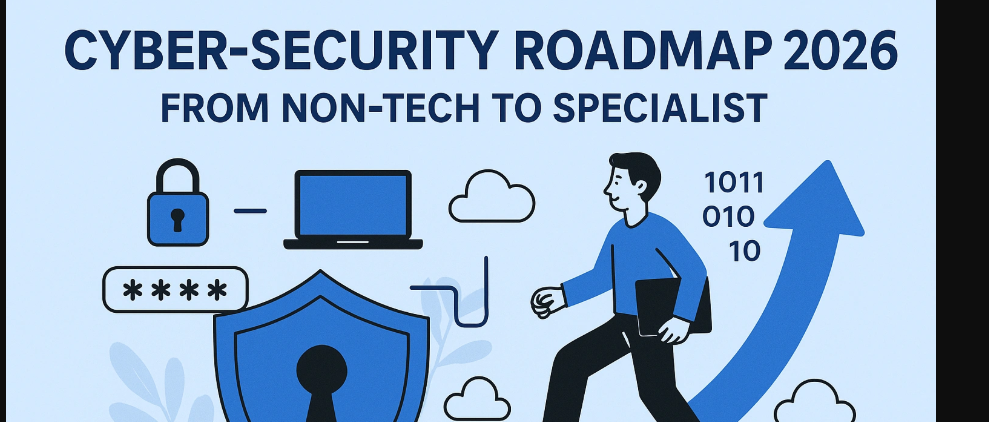
Cybersecurity Career Roadmap for Beginners (2026): Step-by-Step Guide to Start Your Career
Want to start a career in cybersecurity in 2026? This step-by-step cybersecurity roadmap covers beginner skills, certifications, tools, and job roles needed to become a successful cybersecurity professional.
On this page
- Introduction
- Benefits of Choosing Cybersecurity
- Step 1: Learn Basic Computer Fundamentals
- Topics to Learn
- Recommended Skills
- Step 2: Learn Networking Fundamentals
- Topics to Learn
- Recommended Tools
- Step 3: Learn Linux Operating System
- Topics to Learn
- Recommended Linux Distributions
- Step 4: Learn Cybersecurity Basics
- Topics to Learn
- Step 5: Learn Ethical Hacking Basics
- Topics to Learn
- Recommended Tools
- Step 6: Learn Security Tools
- Important Security Tools
- Step 7: Earn Cybersecurity Certifications
- Beginner Certifications
- Step 8: Build Practical Projects
- Project Ideas
- Step 9: Apply for Entry-Level Cybersecurity Jobs
- Entry-Level Cybersecurity Roles
- Popular Career Roles
- Beginner Level
- Mid-Level
- Senior Level
Introduction
Cybersecurity has become one of the fastest-growing and safest careers in the IT industry. With cyberattacks increasing worldwide, companies are investing heavily in protecting their data and systems.
This growing demand has created thousands of job opportunities for cybersecurity professionals. Whether you are a student, fresher, or working professional looking to switch careers, cybersecurity offers strong job stability and excellent salary growth.
In this guide, you will learn the complete cybersecurity career roadmap for beginners in 2026, including skills, tools, certifications, and career paths.
What Is Cybersecurity?
Cybersecurity is the practice of protecting computer systems, networks, and data from cyber threats such as hacking, malware, and unauthorized access.
Cybersecurity professionals help organizations:
- Protect sensitive data
- Prevent cyberattacks
- Detect security threats
- Respond to security incidents
- Maintain secure systems
Every modern company depends on cybersecurity to operate safely.
Why Choose Cybersecurity as a Career in 2026?
Cybersecurity remains one of the safest IT careers due to increasing cyber threats and digital transformation.
Benefits of Choosing Cybersecurity
- High demand across industries
- Strong salary potential
- Long-term career stability
- Global job opportunities
- Continuous learning and growth
Cybersecurity professionals are needed in industries such as banking, healthcare, government, and e-commerce.
Cybersecurity Career Roadmap (Step-by-Step)
Follow this beginner-friendly roadmap to start your cybersecurity journey.
Step 1: Learn Basic Computer Fundamentals
Before entering cybersecurity, you must understand how computers and networks work.
Topics to Learn
- Computer hardware basics
- Operating systems
- Networking fundamentals
- Internet protocols
- File systems
Recommended Skills
- Basic troubleshooting
- Command-line usage
- Understanding system architecture
These fundamentals build a strong foundation for cybersecurity learning.
Step 2: Learn Networking Fundamentals
Networking is the backbone of cybersecurity. Understanding networks helps identify vulnerabilities and security threats.
Topics to Learn
- TCP/IP model
- DNS and DHCP
- Firewalls
- Routers and switches
- Network protocols
Recommended Tools
- Wireshark
- Cisco Packet Tracer
Networking knowledge is essential for cybersecurity professionals.
Step 3: Learn Linux Operating System
Linux is widely used in cybersecurity environments.
Most servers and security tools run on Linux-based systems.
Topics to Learn
- Linux commands
- File permissions
- System monitoring
- User management
Recommended Linux Distributions
- Ubuntu
- Kali Linux
Linux skills are extremely valuable in cybersecurity roles.
Step 4: Learn Cybersecurity Basics
Now you can begin learning core cybersecurity concepts.
Topics to Learn
- Types of cyber threats
- Malware and viruses
- Encryption basics
- Security policies
- Risk management
Understanding these concepts prepares you for real-world security tasks.
Step 5: Learn Ethical Hacking Basics
Ethical hacking involves testing systems to identify vulnerabilities.
Ethical hackers help organizations strengthen their security.
Topics to Learn
- Vulnerability scanning
- Password cracking
- Web security
- Network security
Recommended Tools
- Nmap
- Metasploit
- Burp Suite
Ethical hacking skills are highly valued in cybersecurity.
Step 6: Learn Security Tools
Cybersecurity professionals use specialized tools to monitor and protect systems.
Important Security Tools
- Nmap
- Wireshark
- Nessus
- Metasploit
- Burp Suite
Practicing with these tools improves practical skills.
Step 7: Earn Cybersecurity Certifications
Certifications validate your skills and improve job opportunities.
Beginner Certifications
- CompTIA Security+
- Certified Ethical Hacker (CEH)
- Google Cybersecurity Certificate
Certifications help build credibility in the cybersecurity industry.
Step 8: Build Practical Projects
Hands-on practice is essential for learning cybersecurity.
Project Ideas
- Network scanning lab
- Password security testing
- Vulnerability detection project
- Secure web application testing
Practical projects demonstrate real skills to employers.
Step 9: Apply for Entry-Level Cybersecurity Jobs
After gaining knowledge and practical experience, you can apply for beginner roles.
Entry-Level Cybersecurity Roles
- Security Analyst
- Network Security Technician
- IT Support Security Specialist
- Junior Penetration Tester
These roles provide real-world experience.
Cybersecurity Career Paths
Cybersecurity offers multiple career paths based on your interests.
Popular Career Roles
- Cybersecurity Analyst
- Ethical Hacker
- Security Engineer
- Penetration Tester
- Security Architect
Each role requires specialized knowledge and experience.
Salary Expectations in Cybersecurity (2026)
Cybersecurity salaries vary based on experience and location.
Beginner Level
₹4–8 LPA
Mid-Level
₹8–18 LPA
Senior Level
₹20–40+ LPA
Cybersecurity professionals often receive strong salary growth.
Skills Required to Become a Cybersecurity Professional
To succeed in cybersecurity, you must develop both technical and analytical skills.
Important skills include:
- Networking knowledge
- Linux fundamentals
- Security tools
- Risk analysis
- Problem-solving skills
These skills help professionals identify and prevent security threats.
Future of Cybersecurity Careers
Cybersecurity demand is expected to grow rapidly in the coming years.
Emerging trends include:
- Cloud security
- AI-driven cybersecurity
- Zero Trust security models
- IoT security
Professionals who stay updated with new technologies will remain highly valuable.
Key Takeaways
- Cybersecurity is one of the safest IT careers in 2026
- Networking and Linux are essential beginner skills
- Certifications improve job opportunities
- Practical projects are important for learning
- Cybersecurity offers strong salary growth
Building cybersecurity skills today can create long-term career success.
Final Thoughts
Cybersecurity is one of the most stable and rewarding careers in the technology industry. With increasing cyber threats worldwide, organizations need skilled professionals to protect their systems.
By following this cybersecurity roadmap step-by-step, beginners can build strong technical skills and enter one of the fastest-growing fields in IT.
Starting early, practicing regularly, and staying updated with new tools will help you succeed in the cybersecurity industry.
Article information
By: JobAdvice Team
Published: Mar 25, 2026
Updated: Mar 25, 2026
We verify job and career information against official source pages where available. How we verify information